





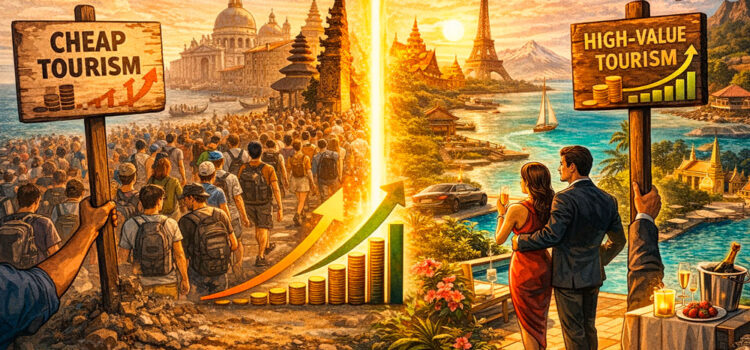
For decades, global tourism was driven by a simple metric: the number of visitors. Low-cost airlines, digital booking platforms, and social media transformed travel into a mass phenomenon. However, by the mid-2020s, it became clear that unlimited growth in tourist numbers does not necessarily translate into sustainable prosperity.
Today, many destinations are facing the consequences of overtourism — overcrowded cities, strained infrastructure, housing shortages, environmental degradation, and growing resentment among local residents. In response, a new global paradigm is emerging: shifting the focus from visitor numbers to visitor value.
Sustainable tourism: from concept to strategy
Originally associated mainly with environmental protection, sustainable tourism has evolved into a comprehensive economic and social strategy. Under this framework, countries are increasingly prioritizing travelers who:
- spend more per trip,
- stay longer,
- respect local culture and regulations,
- contribute meaningfully to local economies.
This shift marks a deliberate move away from low-budget mass tourism.
Wander.ist analysis: destinations redefining tourism
Thailand
Thailand has been gradually reshaping its tourism strategy to focus on higher-value visitors. Rather than increasing arrivals, the government aims to boost average spending per tourist. Initiatives include long-term visas for digital nomads, expansion of medical tourism, and luxury travel development. Authorities in destinations such as Phuket have openly emphasized the need for more responsible and affluent travelers.
Bali
Bali’s immense popularity has come at a cost. In response, the island introduced a tourist tax and stricter environmental and cultural regulations. The goal is not to reduce tourism entirely, but to transform it into a more sustainable and higher-value model.
Venice
Venice has become a global symbol of overtourism. Entry fees for day visitors and restrictions on cruise ships are designed to reduce pressure on the city while preserving its unique cultural heritage and livability.
Amsterdam
Amsterdam has actively distanced itself from mass entertainment tourism. Measures such as banning new hotels in the city center, restricting alcohol sales, and curbing party tourism reflect a strategic shift toward culturally engaged visitors.
Bhutan
Bhutan represents the most radical example of high-value tourism. Strict limits on visitor numbers, mandatory travel packages, and one of the world’s highest tourist taxes allow the country to protect its environment while maximizing economic returns.
What this means for travelers
The message is clear: future travel will likely be less frequent, more expensive, and more regulated. Travelers from Central Asia, including Kyrgyzstan, should expect higher costs, additional taxes, and stricter rules — but also more curated and meaningful travel experiences.
Conclusion
Global tourism is entering a new phase of maturity. The era of chasing visitor numbers is ending. In its place comes a model centered on sustainability, balance, and long-term value. This transformation is not temporary — it is redefining how the world travels.